Home / Shipping
A CNFans parcel from scales to doorstep
Parcels are where most of the waiting and much of the money sit. Knowing what sets the price and what each tracking status means makes the second half of an order easier to follow.
Boxing several finds together
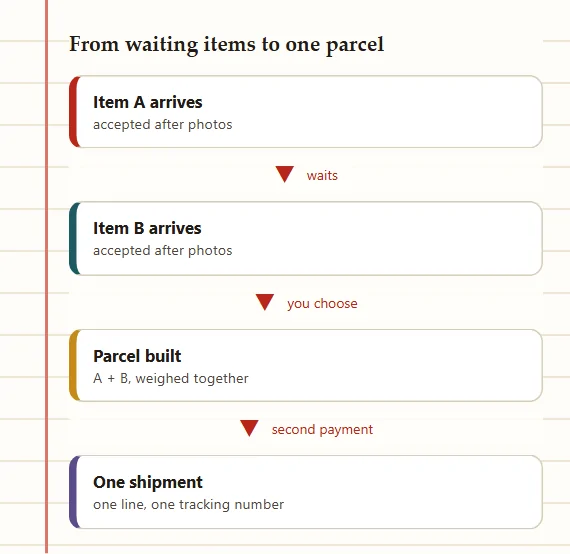
Accepted items sit at the warehouse until you tell CNFans to box them. The archived CNFans page put it plainly: at the warehouse you choose and combine items as you please, and they travel home in one package.
Combining saves the fixed part of each parcel’s cost, but it also means the first item waits for the last. Your daybook makes that trade visible: the arrival dates show how long each item has been sitting, and the timeline tool shows which stage is the long one.
Decide the split before you order, not after. If one item is urgent and the rest can wait, planning two parcels from the start costs less grief than holding the urgent one hostage to a slow seller. A line per parcel keeps the two records from blurring into each other.
Scale weight, bulk weight, billed weight
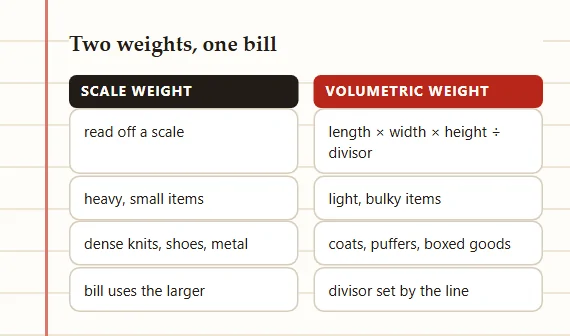
Parcels are priced on weight, and most lines also look at bulk. A carrier works out a volumetric weight from the parcel’s length, width and height, and charges whichever is greater, the scale reading or the volumetric figure. The divisor used varies by line, so check it on the line’s own details.
That is why one boxy puffer can cost more to post than several folded tees, and why packaging matters. Write down the weight on the bill and, if shown, the dimensions. If the bill lands far above an estimate you saw, those two numbers are the ones you ask about.
Settling on a line for the parcel
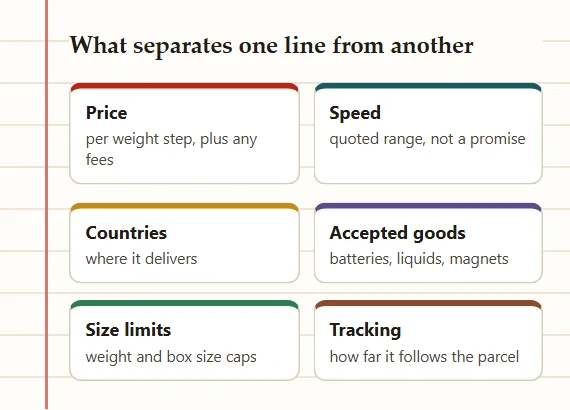
Shipping lines differ in price, speed, the countries they reach and what they will carry. One line takes the battery or the liquid that the next refuses outright, and magnets and powders divide them the same way. For line prices, the archived menu carried that Estimation item, and the site footer showed DHL, FedEx and China Post marks.
A capture of the home page dated 5 July 2026 also carried a notice headed “Suspension of Postal Routes to EU Destinations”. We do not know whether it still applies. If you ship to the EU, check the line list on the day, and write the line’s exact name into your daybook.
Tracking, and the quiet days in it
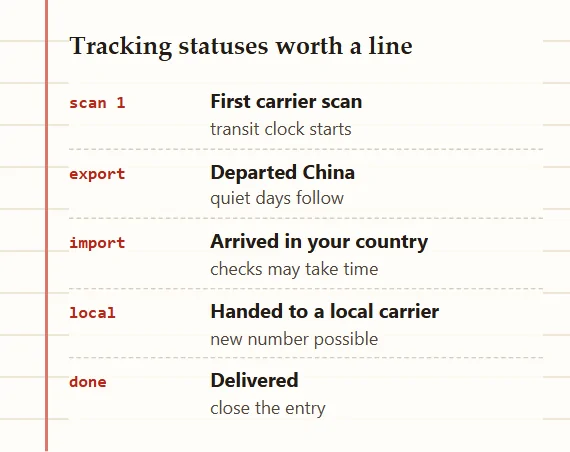
Tracking usually starts with a label being created, then a first scan when the carrier takes the parcel, then a long quiet stretch while it travels and waits for export, flights and import checks. A hand-over to a local carrier often brings a second tracking number, so note both and which is which.
Write each status change as a line with its date: label created, first scan, departed, arrived in your country, handed to local carrier, delivered. Quiet days are normal; a status that has not moved for much longer than earlier stages is the point at which to ask, and your lines show exactly how long it has been. A screenshot of the tracking page on the day you ask saves describing it, and gives the question a date of its own.
Import charges, handled by your own country
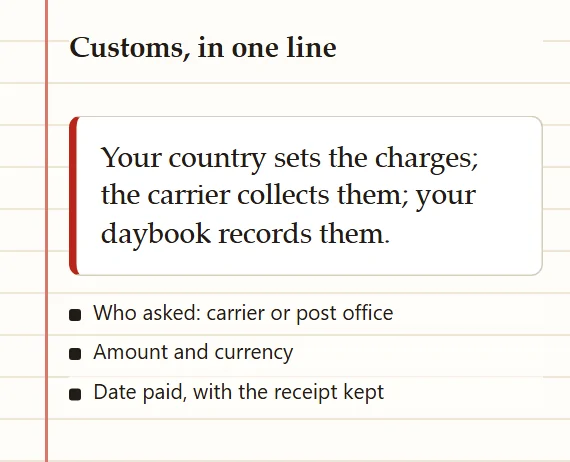
Import duty and tax are set by the country you live in, not by CNFans and not by this site. The parcel’s addressee usually counts as the importer, and the carrier or post office collects whatever is due before handing the box over.
The archived CNFans help centre listed an article on Customs and Taxation that we could not read. We do not give advice on how to fill in customs forms; for your own rules, your national customs authority’s website is the place to look. What belongs in your daybook is simple: any charge requested, who requested it, the amount and the date you paid.